
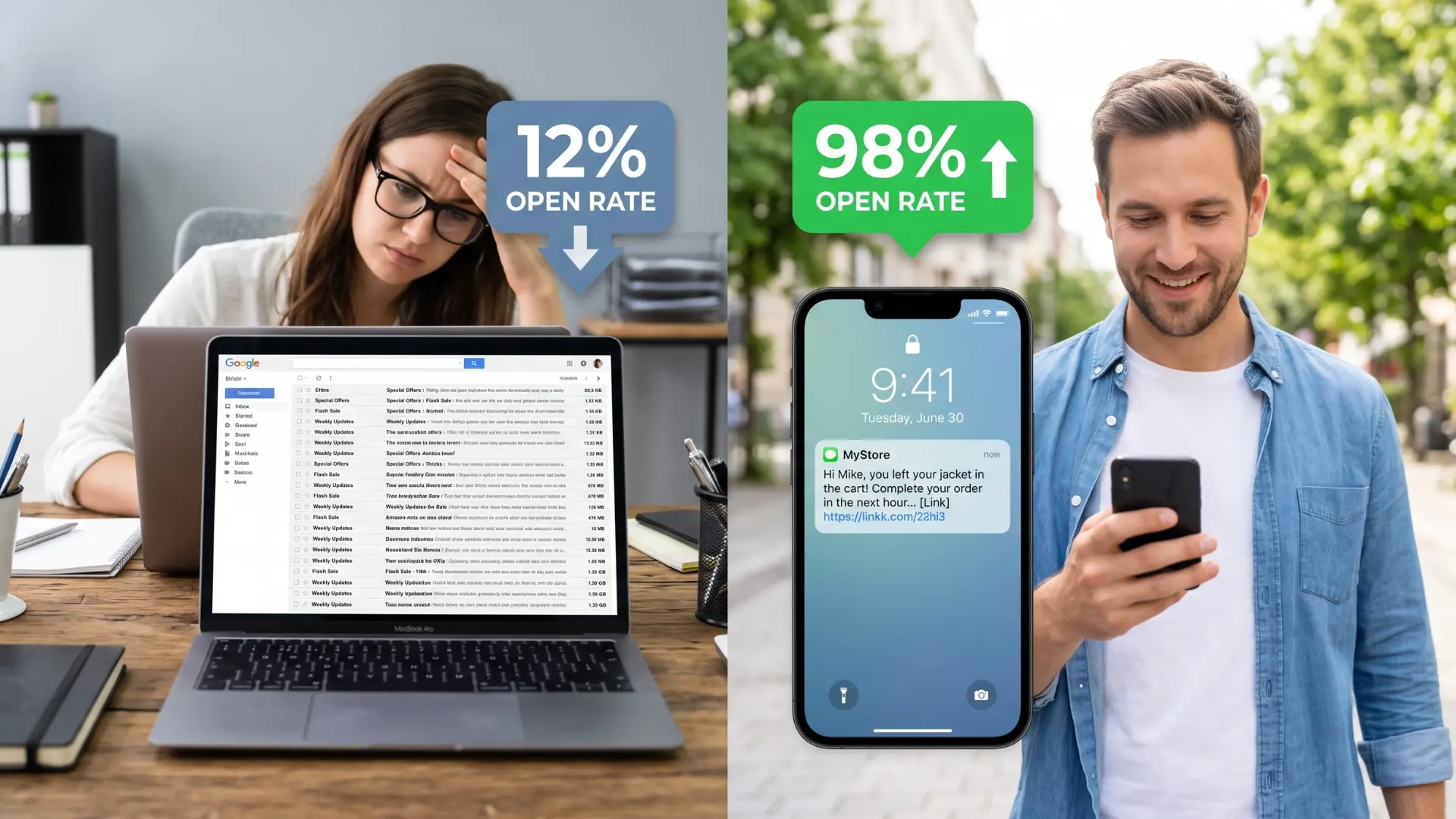
You just launched a new collection and blasted a beautiful email to 20,000 subscribers, only to be met with a dismal 12% open rate. Your customers aren’t ignoring you; they are drowning in inbox noise.
It feels like shouting into a void. Your customers aren’t ignoring you on purpose; they are just drowning. Their inboxes are a graveyard of “Special Offers,” “Flash Sales,” and “Weekly Updates.” Your perfectly crafted email is just another corpse in the pile.
Meanwhile, their phone is in their hand. It buzzes. They look instantly.
This is the disparity that kills e-commerce growth. Email is for “eventually.” SMS is for “right now.”
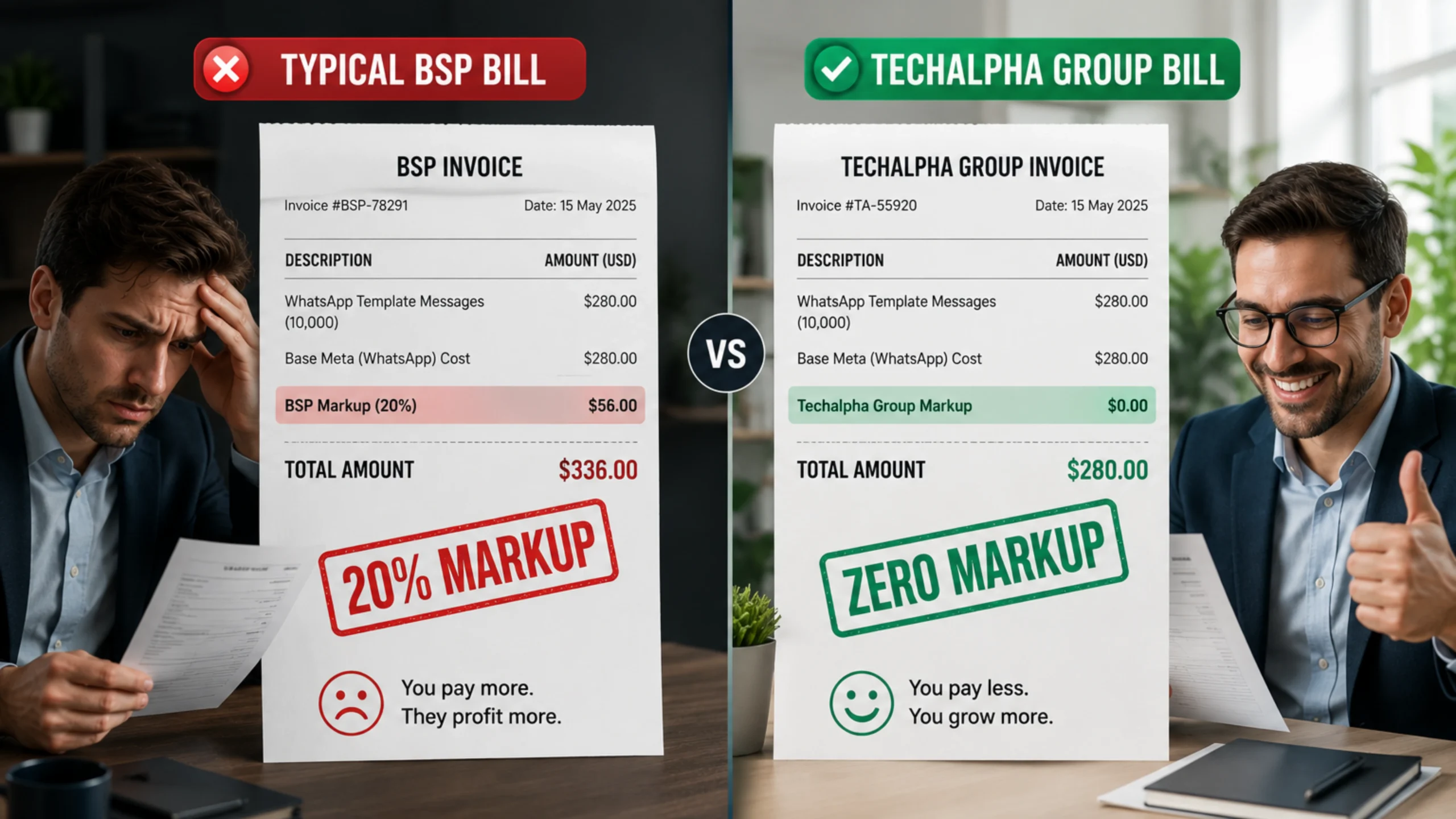
For Shopify store owners, the default solution is often to install a generic SMS app from the marketplace. These are fine for beginners, but they come with a “Convenience Tax”—high markups per message and rigid templates.
Enter the Custom Bulk SMS API for Shopify.
By integrating a direct API (like Techalpha Group) into your store, you bypass the middleman apps. You get wholesale pricing, total control over the logic, and the ability to send messages that actually land in the inbox, not the spam folder.
This guide is your blueprint for ditching the generic apps and building a high-performance Shopify SMS Marketing Integration for your store.
Key Takeaways
- The Engagement Gap: In 2026, standard retail emails suffer from open rates around 16.5% and click-through rates below 1.5%. In stark contrast, SMS boasts an open rate of 98%, with 90% of messages read within the first three minutes.
- The ROI of Recovery: Cart abandonment remains the biggest leak in e-commerce. Abandoned Cart SMS Recovery campaigns consistently generate an ROI exceeding 3,000%, vastly outperforming email recovery sequences.
- Cost Efficiency: Generic Shopify apps often charge a premium per message. Using a direct Transactional SMS API provides wholesale pricing, saving high-volume merchants thousands of dollars annually.
- Total Control via Webhooks: Utilizing Shopify Webhooks for SMS allows developers to build custom logic—like checking time zones and cart values—before sending a text, ensuring maximum relevance and compliance.
The Concept (The "VIP Lane" Analogy)
To understand why a Bulk SMS API for Shopify is superior to a standard plug-and-play app, think of a nightclub.
- The App is the General Admission line. It’s easy to get in, but you pay a cover charge (higher cost per SMS), and you are stuck with everyone else. You follow their rules. If the app goes down, your marketing goes down.
- The API is the VIP Backdoor. You have the key. You walk straight in. You pay the wholesale price for drinks (messages). You control the music.
Why the API Wins:
- Flexibility: You decide exactly when an SMS is sent (e.g., “Send 45 minutes after cart abandonment, but only if the cart value is >$50”).
- Reliability: You connect directly to the telecom infrastructure, skipping the “app layer” that often adds latency.
- Cost: You pay for usage, not a monthly subscription fee plus a massive per-message markup. At scale, paying $0.04 per SMS via an app vs. a fraction of a cent via an API adds up to massive profit margins.
The Execution (How to Integrate Without Headaches)
You don’t need to be a coding wizard to set this up. Modern APIs are designed to “shake hands” with Shopify easily. Here is the workflow.
Step 1: The Trigger (Shopify Webhooks)
Shopify has a built-in notification system called Webhooks. These are signals that Shopify fires off whenever something happens in your store.
Key Shopify Webhooks for SMS:
- orders/create: Customer placed an order.
- orders/fulfilled: You shipped the item.
- checkouts/create & checkouts/update: The goldmine for Abandoned Cart SMS Recovery.
Step 2: The Listener (Your Middleware)
You need a small script (hosted on your server or a serverless function like AWS Lambda) that listens for these Webhooks.
- Shopify shouts: “Hey! Order #1001 was just placed by John!”
- Your Script hears it: “Got it. Let me prepare the SMS.”
Step 3: The Dispatch (The API Call)
Your script extracts the phone number and order details, then calls the Techalpha API to send the message.
Pseudo-Code Example (PHP):
// Shopify Webhook sends JSON data
$data = json_decode(file_get_contents('php://input'), true);

if ($webhook_topic == 'orders/create') {
    $phone = $data['customer']['phone'];
    $name = $data['customer']['first_name'];
    $order_id = $data['order_number'];

    // Call Techalpha API
    $sms_body = "Hi $name! Thanks for ordering from MyStore. Your
Order #$order_id is confirmed.";

    send_sms_via_Techalpha($phone, $sms_body);
}
Step 4: The Intelligent Filter
This is where the API shines. You can add logic that generic apps can’t handle.
- “Is this an international number? If yes, route via Techalpha’s Global Pipe.”
- “Is it 3:00 AM in the customer’s timezone? If yes, queue the message for 9:00 AM.”
Protecting Your ROI: Pitfalls Every Merchant Should Avoid
Implementing a Shopify SMS Marketing Integration gives you power, but with power comes responsibility. Here is where most DIY integrations fail.
1. The "3 AM Wake Up Call"
Shopify operates in UTC time. Your customer lives in California. If an order update triggers at 10:00 AM UTC, that might be 3:00 AM for your customer.
- The Mistake: Sending the SMS immediately.
- The Result: An angry customer who woke up thinking it was an emergency. They unsubscribe instantly.
- The Fix: Your API logic must check the shipping address timezone and enforce “Quiet Hours” (e.g., do not send between 9 PM and 8 AM).
2. The "Lawsuit Trap" (Compliance)
SMS is heavily regulated.
- USA: TCPA requires explicit written consent at checkout. You need a 10DLC registration to ensure deliverability.
- India: You must use DLT Compliant SMS for E-commerce. You cannot send any SMS without registering your Entity and Templates with the government first.
- The Fix: Use an infrastructure provider like Techalpha Group that understands these rules and helps you register your headers to ensure you don’t get blocked or fined.
3. The "Generic Spam" Filter
Carriers are aggressive about blocking spam. If you send: “BUY NOW!! 50% OFF CLICK HERE bit.ly/xx” it will be blocked instantly.
- The Fix: Use custom domains for links. Personalize every message (“Hi Sarah”). Avoid all-caps and excessive exclamation marks.
Advanced Use Case – The Abandoned Cart Saver
Let’s look at the single most profitable workflow you can build with a Transactional SMS API.
The Scenario: A user adds a $200 jacket to their cart. They enter their details but leave at the shipping page.
The API Flow:
- T+15 Minutes: Shopify fires checkouts/update.
- Logic Check: Is the cart value > $100? Yes. Is the phone number valid? Yes.
- Action: Send a “Nudge” SMS.
“Hi Mike, we saved your jacket! It looks great. Complete your order in the next hour for Free Shipping. [Link]” - T+24 Hours: Still no purchase?
- Action: Send a “Final Offer” message via Verified WhatsApp (using Techalpha’s multi-channel API).
“Last chance, Mike. Here is a 10% code: SAVE10.”
This multi-stage, logic-driven approach recovers sales at a rate generic apps simply cannot match.
Why Choose the Techalpha Group API?
This is where Techalpha Group steps in as the “grown-up” solution for Shopify merchants. Most apps are aggregators; Techalpha is an infrastructure provider.
- The Techalpha Group Shopify Plugin (Coming Soon) vs API: While you can integrate via API for total control, Techalpha is developing streamlined connectors that handle the heavy lifting of Webhook listening for you.
- Native DLT Support: For Indian merchants, this is non-negotiable. Techalpha’s dashboard is built to sync with DLT platforms (Jio/Airtel), ensuring your transactional SMS never fails due to template mismatches.
- Smart Routing: If you have customers globally, Techalpha routes the SMS through Tier-1 local carriers in each region. This ensures the message arrives in seconds (critical for OTPs) rather than minutes.
Maximize Your Shopify Sales with Direct SMS Engagement
Email is for “FYI.” SMS is for “ROI.”
If you rely solely on email to talk to your customers, you are leaving massive amounts of engagement and revenue on the table. But don’t just bolt on a cheap, rigid app.
Build an asset. By integrating a Bulk SMS API for Shopify, you own the data, you control the cost, and you ensure that when you speak, your customer actually listens.
Ready to wake up your sales? Stop shouting into the void. Start tapping them on the shoulder.