Techalpha Group Website

🌍🌴 Meet us at BATIC 2026 in Bali, Indonesia | Aug 24–28! ✨; 🌴 Meet us at BATIC 2026 in Bali, Indonesia | Aug 24–28! ✨   🌴 Meet us at BATIC 2026 in Bali, Indonesia | Aug 24–28! ✨   🌴 Meet us at BATIC 2026 in Bali, Indonesia | Aug 24–28! ✨   🌴 Meet us at BATIC 2026 in Bali, Indonesia | Aug 24–28! ✨   🌴 Meet us at BATIC 2026 in Bali, Indonesia | Aug 24–28! ✨   🌴 Meet us at BATIC 2026 in Bali, Indonesia | Aug 24–28! ✨   🌴 Meet us at BATIC 2026 in Bali, Indonesia | Aug 24–28! ✨  

A2P Messaging

WhatsApp 2FA vs SMS
A2P Messaging, Verified WhatsApp

WhatsApp 2FA vs SMS OTP: The Battle for Secure Verification

There is nothing more frustrating for a high-intent user than staring at a login screen, waiting for a 6-digit text that takes a full minute to arrive. This isn’t just a poor UX; it is a fundamental security vulnerability. For the last decade, SMS One-Time Passwords (OTP) have been the default standard for verification. But in an era of SIM swapping and network hacks, SMS is beginning to look like a relic. A new challenger has emerged: WhatsApp 2FA. This shift isn’t just about following trends. It is about closing a massive security gap in your infrastructure. But which method is truly right for your user base? Let’s break down the technical reality of WhatsApp 2FA vs SMS OTP. Key Takeaways SMS OTPs rely on SS7 networks, a legacy protocol that lacks modern authentication and encryption. Hackers exploit SMS Vulnerabilities by intercepting texts through network access or executing SIM swap attacks. WhatsApp 2FA uses internet-based end-to-end encryption to bypass cellular network vulnerabilities entirely. Implementing Two-Factor Authentication Security on WhatsApp provides an officially verified, branded experience that prevents phishing. Businesses achieve the best results by using WhatsApp as the primary channel, with intelligent fallback to SMS. The Old Guard: Why SMS is Breaking Down To understand why the industry is shifting, we first need to look at how SMS actually works. It is not magic; it is 1980s technology held together with duct tape. The Architecture of Insecurity When your backend triggers an SMS OTP, it travels through the SS7 (Signaling System No. 7) network. This is the global protocol that allows different telecom carriers to talk to each other. Here is the catch: SS7 was built in an era when only state-owned telecom giants had access to the network, so it was designed without security mechanisms or verification. Today, thousands of operators worldwide have SS7 access. Because messages transmitted over these networks are typically unencrypted, anyone with network access can intercept your SMS OTPs in transit without ever touching your user’s phone. The “Man-in-the-Middle” Attacks Beyond network interception, SMS suffers from critical local SMS Vulnerabilities: SIM Swapping: Attackers can convince a mobile provider to transfer your phone number to a new SIM card. Once they control the number, they receive the SMS codes and bypass your security. Spoofing: SMS headers are easily faked. A hacker can send a phishing link from a sender ID that looks like your bank, tricking the user into handing over credentials. SMS was designed for simple text messages, not for securing financial assets. The Challenger: How WhatsApp 2FA Changes the Game Enter WhatsApp 2FA. This isn’t just “SMS with a logo.” It is a fundamentally different protocol. WhatsApp verification works over the internet (VoIP/Data) rather than the cellular signaling network. For businesses, this is managed through the WhatsApp Business API. When a user requests a login code, the API triggers a message from your verified business profile. The Security Upgrade End-to-End Encryption: The message is encrypted from the moment it leaves your server until it hits the user’s device. Even Meta cannot read the code inside. Internet-Based Delivery: Because it uses Wi-Fi or mobile data, it bypasses the vulnerable SS7 network entirely. Device Binding: WhatsApp accounts are tied to a specific device installation. Even if a hacker SIM swaps the number, they cannot immediately access the victim’s WhatsApp history without re-verifying the app. Head-to-Head Comparison: WhatsApp 2FA vs SMS OTP Let’s look at how they stack up on the metrics that matter for Secure User Verification. 1. Security SMS: Low. Vulnerable to SS7 interception, spoofing, and SIM swapping. WhatsApp: High. Employs end-to-end encryption, making it notably challenging to intercept. Winner: WhatsApp 2. User Trust & Phishing Prevention SMS: Users receive OTPs from random short codes. They have no way of knowing if it’s genuinely from your brand. WhatsApp: The message arrives from a Meta-verified WhatsApp Business account, complete with your official logo, display name, and a trusted green tick badge. Winner: WhatsApp. Visual verification kills phishing attempts instantly. 3. Delivery Speed & Reliability SMS: Variable. Depends on cell tower congestion. WhatsApp: WhatsApp delivers messages within milliseconds, ensuring authentication without delays. Winner: WhatsApp. Reach SMS: Universal. Works on every phone, smart or dumb, anywhere in the world. WhatsApp: Requires a smartphone and an active internet connection. Winner: SMS. The User Experience: Removing the Friction Security matters, but conversion pays the bills. From a UX perspective, WhatsApp 2FA offers a vastly smoother flow. The SMS Experience: User waits → Notification buzzes → User swipes down → Memorizes code → Swipes up → Types code. (Friction Point: If the code is “8421”, did they type “8412”?) The WhatsApp Experience: User requests code → Notification appears → User taps “Copy” or uses Android’s “Autofill from App” feature → User is logged in. Additionally, WhatsApp’s highly interactive platform allows for “One-Tap Verification” buttons. Instead of typing a code, you can send a message with a button that says “Approve Login.” Zero typing required. Implementation Pitfalls and Intelligent Fallback Strategies You might be thinking, “Okay, WhatsApp is better. Let’s switch.” But you cannot simply turn off SMS. What if your user is in a region where WhatsApp is blocked, or they don’t have internet access? If you only offer WhatsApp, you lock them out. The solution is an intelligent routing system orchestrated by your API provider. You need a platform that attempts to send the OTP via WhatsApp first, and if undelivered, automatically retries and falls back to SMS. This hybrid approach gives you the security of WhatsApp for the majority of your users, and the universal reach of A2P SMS for the rest. Upgrade Your Security with Techalpha Group Implementing Two-Factor Authentication Security on WhatsApp requires navigating Meta’s approval processes and building complex fallback logic. Techalpha Group specializes in this transition. We handle the Green Tick Verification process for your brand, help design approved message templates, and provide an API that manages Smart Fallback automatically. The debate of WhatsApp 2FA vs SMS OTP isn’t about picking a winner; it’s
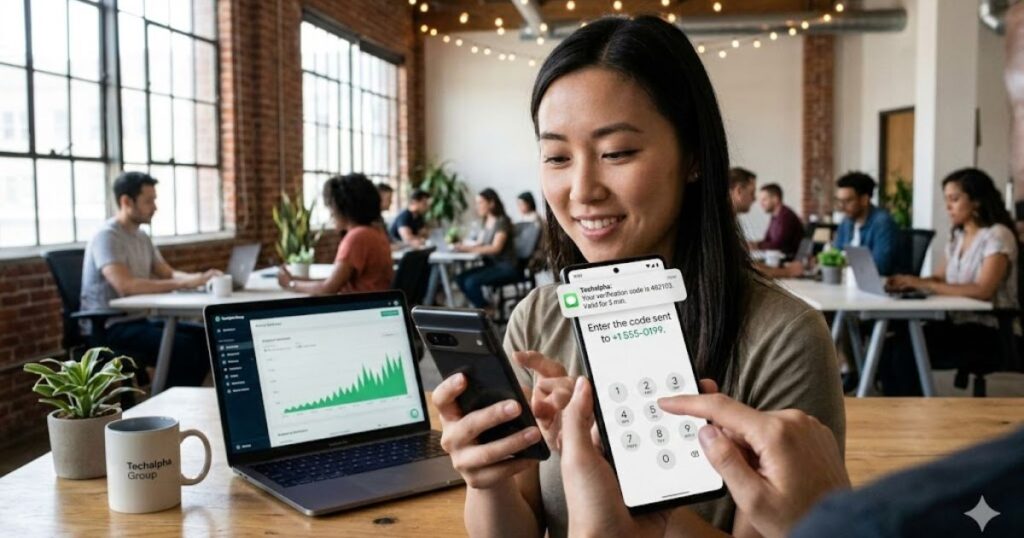

Secure User Verification showing a 6-digit OTP code on a smartphone via Techalpha Group SMS API.
A2P Messaging

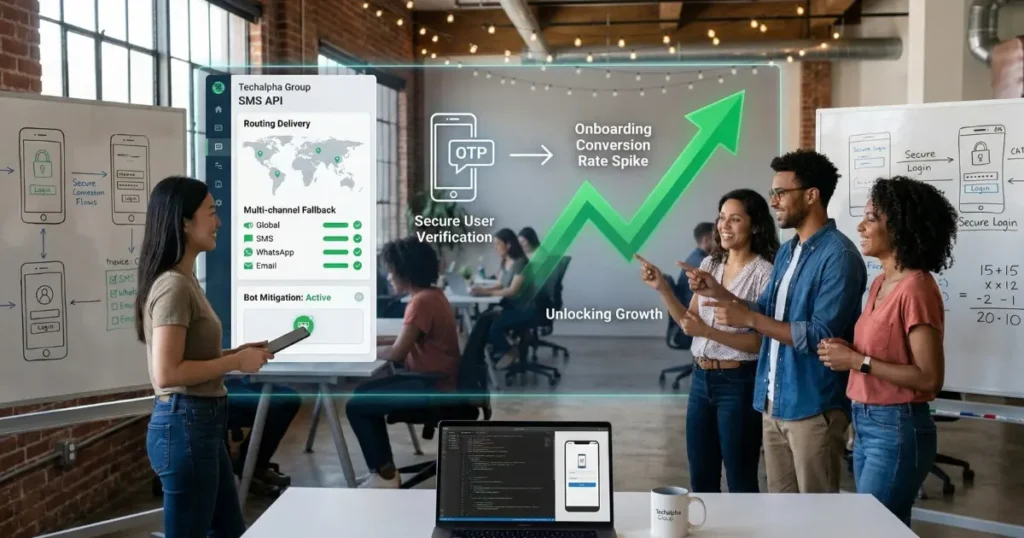
Unlocking Growth: The Essential Guide to OTP API Solutions for Startups

Picture this: You launch your MVP on Product Hunt and traffic spikes, netting 1,000 new signups. But when you look at your active user count, it’s only 600. Your product didn’t fail them; your onboarding friction did. For a startup, this is the “Silent Killer.” You are burning cash to acquire users, only to lose them to bad infrastructure. Why “Build vs. Buy” is a No-Brainer for OTP Infrastructure An OTP (One-Time Password) is a 6-digit code valid for a single session. Simple, right? But building the infrastructure to deliver that code is a nightmare involving carrier regulations like DLT in India or 10DLC in the US. Modern OTP API solutions for startups bridge this gap by acting as a digital bouncer for your app, providing: Two-Factor Authentication (2FA): Essential for protecting user accounts from hackers. Secure User Verification: Confirming your users are real humans with real SIM cards, not scripts. Pro Tip: Understanding A2P SMS Compliance is vital. If you try to send business OTPs via personal routes (P2P), carriers will block your traffic instantly. This is the fundamental difference in A2P vs P2P sMS for businesses. Key Features to Look for in the Best OTP Providers When evaluating providers, ignore marketing fluff and look for these engineering metrics: 1. Direct Carrier Connections You need a provider that connects directly to Tier-1 carriers to skip the “aggregator queue” and ensure high delivery rates. 2. Low Latency (The 5-Second Rule) Speed is a feature. If an OTP takes longer than 10 seconds, conversion drops by 20%. The best APIs guarantee delivery in under 5 seconds. 3. Multi-Channel Fallback SMS fails sometimes. The best solutions offer Intelligent Fallback: if SMS fails, the API automatically triggers WhatsApp Business API or Voice. Top OTP API Solutions for Startups in 2026 Techalpha Group (The Growth Partner) Techalpha Group has become the “secret weapon” for high-growth startups, particularly in Fintech and Healthcare. Their Techalpha Group SMS API isolates your traffic from marketing spam, ensuring banking-grade security and maximum delivery speed. Twilio (The Industry Standard) Twilio is the massive incumbent in the space, known for incredible documentation but can be expensive and complex for smaller teams. Vonage (The Global Alternative) Formerly Nexmo, Vonage is a strong competitor with a focus on deep carrier networks in Europe and Asia. OTP Integration Best Practices for Startups Do not trigger an OTP for every single action; that creates friction and bloats your bill. Instead, use it for: User Registration: Verify the number once at the door. Suspicious Login: Trigger 2FA only if the user logs in from a new device. Financial Transactions: If money is moving, verify the human. Ready to Secure Your Startup? Don’t let expensive or unreliable APIs slow down your growth. Techalpha Group specializes in fast, secure, and affordable verification strategies that scale with you. Get Your Custom OTP Strategy Today

Deep sea fiber-optic cables representing global telecom infrastructure and network vulnerabilities.
A2P Messaging

The Invisible Fragility: How Global Telecom Instability is Reshaping 2026

Today, we treat digital internet like the air we breathe. We stream videos and talk across the world instantly. However, we rarely think about the physical wires that make this possible. Now, in 2026, global conflicts have exposed a harsh truth. The global telecom industry faces massive instability. Consequently, the hidden damage to our telecom network is a real and active threat. This blog explores three major risks. First, we look at dangerous ocean corridors. Second, we examine physical hardware attacks. Finally, we discuss how these network failures hurt private businesses. 1. The Deep-Sea Choke Points: Lessons from the Red Sea​ Subsea ocean cables carry 99% of global data. These cables act as the real nervous system of the world economy. People often talk about “the cloud.” However, the cloud actually lives at the bottom of the ocean. Recently, the Red Sea Corridor became the most dangerous digital bottleneck in the world. Global conflicts show exactly how easily attackers can block internet traffic. For example, a dropped anchor or an intentional attack can cut off Europe, Africa, and Asia for weeks. Therefore, repairing these cables takes a long time. Furthermore, repair ships refuse to enter dangerous war zones. Ultimately, these delays cause huge financial losses. The Concentration Risk Geography is not the only problem. Instead, the real issue is concentration. Massive amounts of data travel through a few narrow spaces. As global telecom instability rises, insurance costs skyrocket. Consequently, businesses and normal buyers must pay these high protection costs. 2. Cyber-Physical Attacks: The New Hardware Sabotage For years, cybersecurity just meant protecting software from hackers. Today, the threat includes physical hardware sabotage. In 2026, state-sponsored hackers actively target physical network parts. For instance, they attack base stations, routers, and satellite dishes. Their goal is complete service denial, not just stealing data. Thus, they destroy hardware from the inside out using special code. They turn expensive telecom equipment into useless bricks. Because of this, standard software patches cannot fix the damage. Instead, companies must buy and install new physical parts. However, ongoing trade wars make buying new parts very difficult. “We are moving from an era of data breaches to an era of total infrastructure paralysis.” 3. The Private Business Domino Effect When global telecom networks fail, Big Tech firms are not the only victims. Instead, the damage hurts every private business. Therefore, remote workers, real-time apps, and international stores suffer greatly. These vulnerabilities create a massive lack of trust in the market. Private companies now face three major challenges: SLA Failures: First, companies cannot promise 99.9% uptime anymore. Global routes simply fail too often due to political conflicts. Data Costs: Second, unstable networks force businesses to build local data centers. Consequently, running costs go up drastically. Insurance Limits: Finally, cyber insurance providers refuse to cover “acts of war.” Thus, businesses remain completely unprotected against major outages. 4. The Path Forward: Building Network Resilience Knowing these risks is the first step toward fixing them. The telecom industry must change its focus. Therefore, businesses must prioritize resilience over pure speed. To do this, they must build backup ocean cables. Also, they must use smart AI tools to monitor network health in real-time. Global instability is the new normal. Ultimately, our ability to protect these hidden networks will decide the economic winners of the next decade. Businesses can no longer just consume internet connections. Instead, they must actively protect their own infrastructure. Conclusion Finally, the questions posed in our recent report are for everyone. They matter deeply to every IT professional, policymaker, and business leader. Is your business fully prepared for the hidden damage? © 2026 Telecom Insights Report. All rights reserved. Stay connected, stay secure.

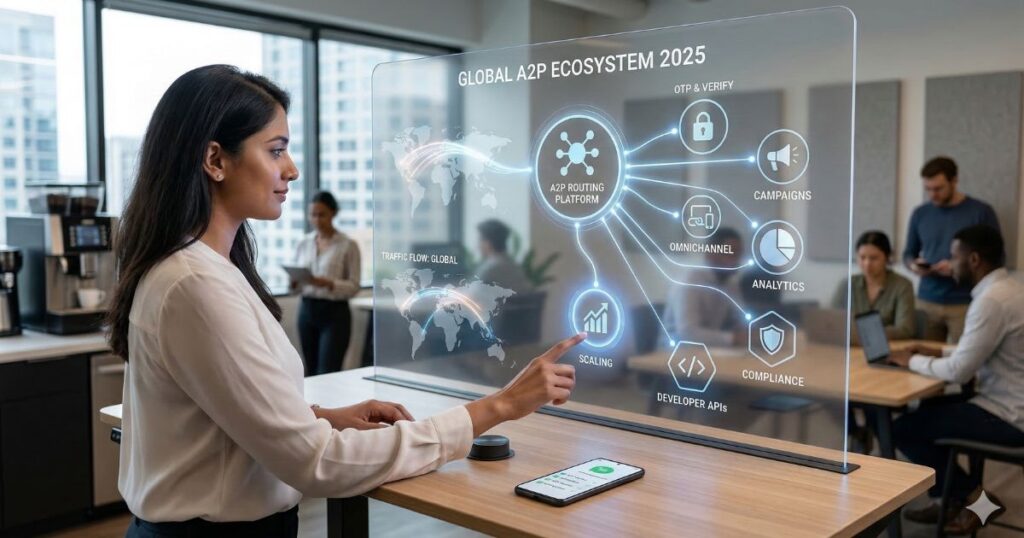
Digital dashboard showing the best A2P messaging software tools connecting to global smartphones.
A2P Messaging

7 Best A2P Messaging Software for 2026

A2P messaging has evolved from one-way SMS alerts into a central part of customer engagement. Today, it is how brands build trust, reduce friction, and deliver instant updates and market themselves. Just like how Uber uses A2P to confirm rides and connect drivers and passengers securely, or how Amazon relies on it for order updates and delivery alerts. These are touchpoints that define customer experience at scale. As industries like finance, healthcare, retail, and travel adopt richer formats across WhatsApp, RCS, email, voice, and AI chatbots, the demand for reliable and scalable A2P platforms has never been higher. Key Takeaways How We Evaluated the Best A2P Messaging Software To rank the top providers, we looked at five criteria that matter most for businesses in 2025: 1. Techalpha Group Techalpha Group delivers an end-to-end CPaaS suite designed to unify all customer communications. Its platform covers SMS, WhatsApp Business API, RCS, email, voice calls, and AI-powered chatbots, enabling businesses to run campaigns and critical alerts from a single dashboard. Key Features Best For Enterprises that want one partner for all customer messaging needs. Why It Stands Out Techalpha Group tops this list for aligning its multi-channel platform with the compliance and engagement needs of regulated industries. 2. Twilio Twilio is one of the best-known names in global communications, trusted by enterprises across every sector. Its strength lies in flexible APIs that give developers the power to build custom messaging, voice, and video applications at scale. Key Features Best For Enterprises building custom global communication solutions. Why It Stands Out Twilio’s flexibility and global scale make it the go-to for businesses that want to design their own communication stack. 3. Vonage Vonage has long been associated with enterprise communications and, under Ericsson, has strengthened its CPaaS capabilities. The company combines messaging, voice, and video services to provide a complete communication toolkit for global businesses. Key Features Best For Large enterprises with complex communication requirements. Why It Stands Out Vonage blends messaging, voice, and video into a unified enterprise solution. 4. Infobip Infobip is one of the largest CPaaS providers in the world, operating through direct partnerships with mobile operators in more than 190 countries. Its platform supports large-scale enterprise needs with omnichannel messaging and strong compliance features. Key Features Best For Multinational enterprises requiring consistent global delivery. Why It Stands Out Infobip’s carrier-grade infrastructure ensures reliable and compliant reach worldwide. 5. Gupshup Gupshup is India’s leading conversational messaging provider, serving both large enterprises and startups across Asia. Its dominance in WhatsApp Business APIs and chatbot deployments has made it a preferred partner for customer engagement at scale. Key Features Best For Brands designing WhatsApp-led customer journeys. Why It Stands Out Gupshup dominates WhatsApp messaging in Asia, making it a top choice for customer engagement in the region. 6. Kaleyra Kaleyra has built a strong reputation in banking, healthcare, and other regulated industries. It offers secure and compliant workflows while maintaining global connectivity across SMS, WhatsApp, and RCS channels. Key Features Best For Businesses in regulated industries such as finance and healthcare. Why It Stands Out Kaleyra places compliance and data security at the core of its offering. 7. MessageBird MessageBird, based in the Netherlands, brings automation and customer support tools together in one platform. It is particularly strong in Europe, where it supports enterprises and SMBs with easy-to-use APIs and workflow builders. Key Features Best For SMBs and enterprises in Europe seeking automation-friendly tools. Why It Stands Out MessageBird combines automation workflows with unified support to simplify operations. Comparison of All the Best A2P Messaging Software Provider Channels Supported Key Strength Best For Techalpha Group SMS, WhatsApp, RCS, Voice, Email, Chatbot Industry focus Regulated industries Twilio SMS, WhatsApp, Voice, Email, Video Developer ecosystem Global enterprises Vonage SMS, Voice, Video, APIs Enterprise integration Large enterprises Infobip SMS, WhatsApp, RCS, Email, Push Global coverage Multinational firms Gupshup SMS, WhatsApp, Chatbots Conversational AI India and Asia markets Kaleyra SMS, WhatsApp, RCS Compliance focus Finance and healthcare MessageBird SMS, WhatsApp, Email, Voice Automation workflows EU-based businesses Conclusion The A2P messaging ecosystem has become a backbone of enterprise communication. While Twilio and Infobip dominate global coverage, and regional players like Gupshup and Kaleyra serve targeted needs, Techalpha Group distinguishes itself with an industry-first, multi-channel approach. There are a lot of other Twilio alternatives that you should be looking for as well. For businesses entering 2025, Techalpha Group is the starting point for building secure, scalable customer engagement.

Scroll to Top

DOWNLOAD E-BOOK