
Your phone buzzes during dinner. It’s a text from a shoe store you visited three years ago offering a generic ‘20% OFF’ blast. You don’t click; you immediately block the number.
Customers today are not just “mobile-first”; they are “filter-first.” Their phones utilize AI to block spam automatically. Their patience for irrelevant interruptions is zero. If you sen d a generic blast, you aren’t just wasting money; you are actively damaging your brand equity.
Enter the Era of the “Pocket Concierge.”
Successful SMS marketing for retail 2026 isn’t about reach; it is about relevance. It is about using data to send a message so timely and useful that the customer thanks you for it.
This guide explores the three massive shifts defining retail messaging this year—RCS, AI, and Conversational Commerce—and how to build a strategy that actually drives revenue without driving customers away.
Key Takeaways
- The Engagement Gap: Standard SMS still boasts a 98% open rate, with 90% of messages read within 3 minutes. However, generic blasts are risky: 23% of consumers will completely abandon a brand if they feel spammed.
- The Power of Personalization: Personalized SMS Campaigns drive 16% higher conversion rates and 35% higher overall engagement than generic mass texts.
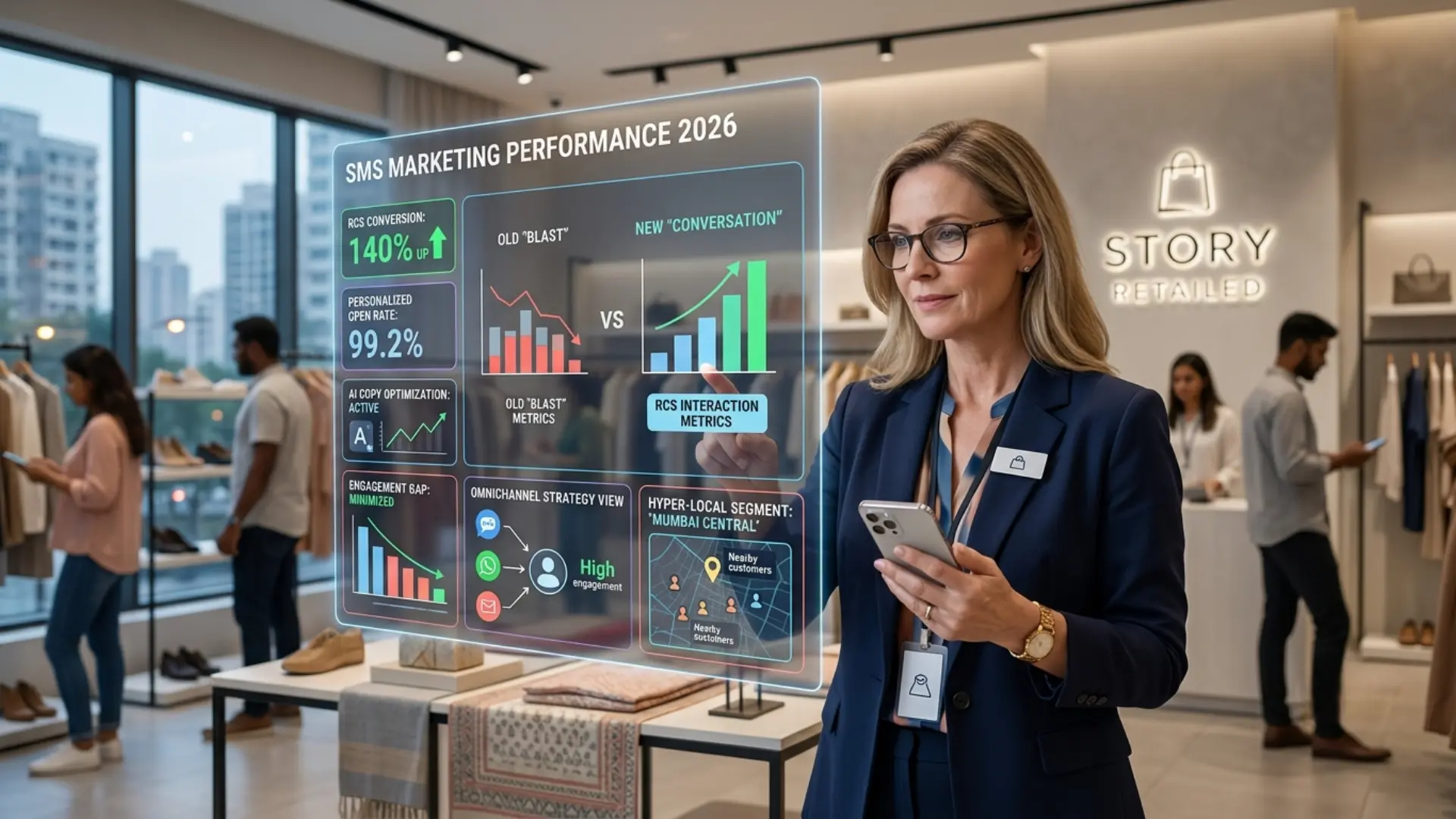
- The Apple Catalyst: Following Apple’s adoption of Rich Communication Services (RCS) in iOS 18, global RCS traffic surged 5x. RCS for Retail is now generating 140% higher conversion rates compared to traditional promotional SMS.
- Two-Way Conversations: The average response rate for conversational SMS is an astonishing 45%, compared to a dismal 6% for email.
The Concept (From "Notification" to "Conversation")
To win in 2026, you need to change your mental model of SMS.
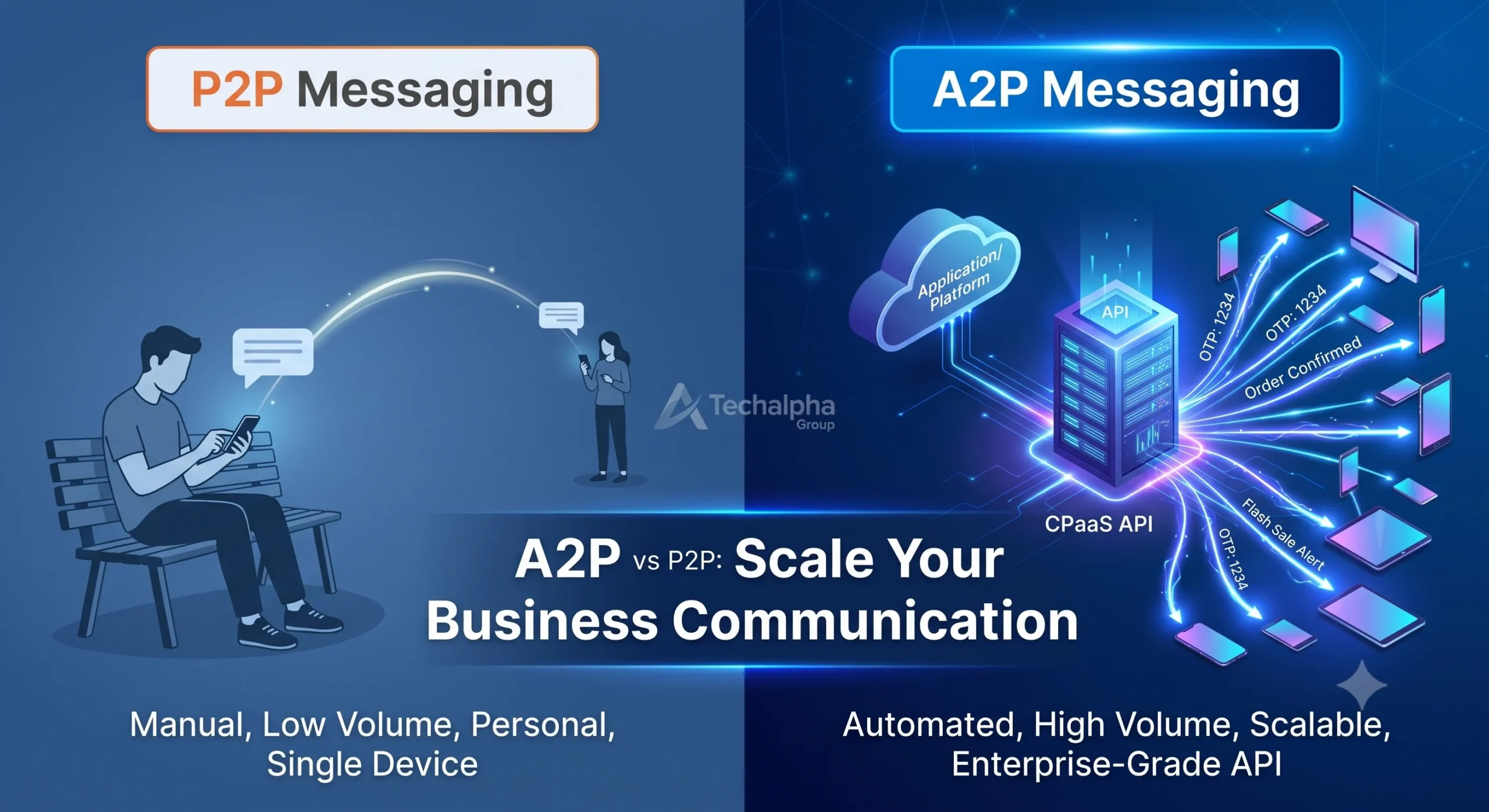
- The Old Model (The Billboard): You broadcast a static message. It is a one-way street. You hope someone sees it and drives to the store.
- The New Model (The Shop Assistant): Imagine a helpful associate walking up to a customer in a physical store.
- Associate: “I see you’re looking at those running shoes. We actually just got your size in stock at the downtown branch. Want me to hold them for you?”
This is what modern Omnichannel Retail Strategy APIs allow you to do at scale. It transforms the channel from a “marketing” tool into a “service” tool. And when you are helpful, you sell more.
The Three Pillars of Retail SMS in 2026
If you are still sending 160 characters of plain text, you are fighting with one hand tied behind your back. Here is what the top 1% of retailers are doing differently.
1. The RCS Revolution (Rich Communication Services)
For years, the “Green Bubble vs. Blue Bubble” war held business messaging back. But now that Apple fully supports RCS globally across iOS 18+, the barrier is completely gone. RCS turns the text message inbox into a mini-app.
- Carousels: Instead of a link to “New Arrivals,” you send a swipeable carousel of 5 dresses directly in the chat.
- Branding: Your message comes from “Nordstrom” with a verified logo, not a random short code like 55021.
- Action Buttons: A “Buy Now” button that triggers Apple Pay or Google Pay without leaving the messaging app.
2. AI-Driven Hyper-Personalization
“Hi [First Name]” is not personalization. That’s a database merge field. True personalization in 2026 means using AI to predict intent.
- Scenario: A customer buys a coffee machine.
- The AI Trigger: 25 days later (the exact average time it takes to finish a bag of beans), the system triggers an SMS.
- The Message: “Running low on roast? Here is a 10% code for a refill. Tap to reorder: [Deep Link].” This isn’t spam; it’s a high-converting utility.
3. Two-Way Conversational Commerce
Stop using “No-Reply” sender IDs. Customers want to ask questions. “Does this come in blue?” “What is your return policy?” Modern platforms connect SMS replies directly to your support desk (Zendesk/Salesforce) or an AI Agent.
- The Result: You turn a simple promotional text into a sales conversation. Conversion rates on 2-way SMS drastically outperform 1-way blasts.
The Execution (The "Techalpha" Strategy)
You can’t execute this manually. You need intelligent infrastructure.
Techalpha Group has emerged as the infrastructure partner of choice for modern retailers because we don’t just sell “SMS credits”; we sell Intelligence.
Step 1: The "Smart Segment" (Data Integration)
Don’t just upload a CSV file. Integrate the Techalpha Group SMS API with your POS (Point of Sale) or Shopify store.
- Techalpha Logic: “Create a segment of users who bought ‘Winter Coats’ in 2025 but haven’t visited the site in 90 days.”
Step 2: The "RCS First" Routing
Techalpha’s API uses advanced “Device Detection.”
- It checks: Does this phone support RCS?
- If Yes: It sends a rich, interactive card with images and buttons.
- If No: It automatically “downgrades” the message to a high-quality SMS with a shortened link. This ensures every customer gets the best possible experience their phone can handle without dropping the message.
Step 3: The "Quiet Hours" Guardrail
Sending a text at 8:00 AM might work in New York, but it’s 5:00 AM in Los Angeles. Techalpha’s system automatically checks the area code or last known IP and queues the message to arrive at the customer’s local 10:00 AM. This simple feature drastically reduces unsubscribe rates.
Common SMS Compliance and Delivery Pitfalls for Retailers
In the rush to adopt these new tools, retailers often trip over regulatory wires.
1. The Compliance Trap (10DLC / DLT)
In 2026, carriers are ruthless.
- USA (10DLC): If you haven’t registered your “Brand” and “Campaign” use cases with The Campaign Registry, major networks will block 100% of your traffic.
- India (DLT): If your message content doesn’t match your pre-registered template exactly, the operator scrubs it.
- The Fix: Don’t try to navigate this alone. Use a provider like Techalpha that offers “Managed Compliance.” We handle the registration paperwork so your messages actually get delivered.
2. Frequency Fatigue
Just because SMS has a 98% open rate doesn’t mean you should abuse it. If you send more than 2-4 marketing texts a week, churn spikes.
- The Fix: Use a “Preference Center.” Let customers choose: “I only want alerts for Flash Sales” or “I only want Order Updates.” Respecting this choice builds massive trust.
3. The "Broken Link" Disaster
Sending a generic bit.ly link often triggers spam filters on the carrier side.
- The Fix: Use branded short links (e.g., nike.com/sale) or rely on RCS cards where the link is embedded natively in a button, which carries significantly higher trust scores with carriers.
Product Integration (Techalpha’s Retail Suite)
This is where Techalpha Group shines. We offer a specific “Retail Acceleration” module within our API to supercharge your campaigns.
Key Features for 2026:
- Inventory-Triggered Alerts: Connect the API to your warehouse. If a “Wishlisted” item comes back in stock, the SMS fires automatically.
- Hyper-local Marketing (Geo-Fencing): Trigger an SMS when a loyal customer walks within 500 meters of your physical store. “Hey Mike, since you’re nearby, pop in for a free coffee!”
- Visual Builder: Design RCS carousels with a drag-and-drop editor—no coding required.
The Future of Retail Engagement: Mastering the Inbox
Retail is no longer about who shouts the loudest. It is about who whispers the smartest.
SMS marketing for retail 2026 is the most intimate channel you have. It sits right next to the messages from your customer’s mother and best friend. Treat that space with respect.
If you use it to blast generic noise, you will be blocked. But if you use it to deliver timely, personalized, and rich value, you will build a customer for life.
Don’t let your competitors own the inbox.