
There is nothing more frustrating for a high-intent user than staring at a login screen, waiting for a 6-digit text that takes a full minute to arrive. This isn’t just a poor UX; it is a fundamental security vulnerability.
For the last decade, SMS One-Time Passwords (OTP) have been the default standard for verification. But in an era of SIM swapping and network hacks, SMS is beginning to look like a relic. A new challenger has emerged: WhatsApp 2FA.
This shift isn’t just about following trends. It is about closing a massive security gap in your infrastructure. But which method is truly right for your user base? Let’s break down the technical reality of WhatsApp 2FA vs SMS OTP.
Key Takeaways
- SMS OTPs rely on SS7 networks, a legacy protocol that lacks modern authentication and encryption.
- Hackers exploit SMS Vulnerabilities by intercepting texts through network access or executing SIM swap attacks.
- WhatsApp 2FA uses internet-based end-to-end encryption to bypass cellular network vulnerabilities entirely.
- Implementing Two-Factor Authentication Security on WhatsApp provides an officially verified, branded experience that prevents phishing.
- Businesses achieve the best results by using WhatsApp as the primary channel, with intelligent fallback to SMS.
The Old Guard: Why SMS is Breaking Down
To understand why the industry is shifting, we first need to look at how SMS actually works. It is not magic; it is 1980s technology held together with duct tape.
The Architecture of Insecurity
When your backend triggers an SMS OTP, it travels through the SS7 (Signaling System No. 7) network. This is the global protocol that allows different telecom carriers to talk to each other.
Here is the catch: SS7 was built in an era when only state-owned telecom giants had access to the network, so it was designed without security mechanisms or verification. Today, thousands of operators worldwide have SS7 access. Because messages transmitted over these networks are typically unencrypted, anyone with network access can intercept your SMS OTPs in transit without ever touching your user’s phone.
The "Man-in-the-Middle" Attacks
Beyond network interception, SMS suffers from critical local SMS Vulnerabilities:
- SIM Swapping: Attackers can convince a mobile provider to transfer your phone number to a new SIM card. Once they control the number, they receive the SMS codes and bypass your security.
- Spoofing: SMS headers are easily faked. A hacker can send a phishing link from a sender ID that looks like your bank, tricking the user into handing over credentials.
SMS was designed for simple text messages, not for securing financial assets.
The Challenger: How WhatsApp 2FA Changes the Game
Enter WhatsApp 2FA. This isn’t just “SMS with a logo.” It is a fundamentally different protocol. WhatsApp verification works over the internet (VoIP/Data) rather than the cellular signaling network.
For businesses, this is managed through the WhatsApp Business API. When a user requests a login code, the API triggers a message from your verified business profile.
The Security Upgrade
- End-to-End Encryption: The message is encrypted from the moment it leaves your server until it hits the user’s device. Even Meta cannot read the code inside.
- Internet-Based Delivery: Because it uses Wi-Fi or mobile data, it bypasses the vulnerable SS7 network entirely.
- Device Binding: WhatsApp accounts are tied to a specific device installation. Even if a hacker SIM swaps the number, they cannot immediately access the victim’s WhatsApp history without re-verifying the app.
Head-to-Head Comparison: WhatsApp 2FA vs SMS OTP
Let’s look at how they stack up on the metrics that matter for Secure User Verification.
1. Security
- SMS: Low. Vulnerable to SS7 interception, spoofing, and SIM swapping.
- WhatsApp: High. Employs end-to-end encryption, making it notably challenging to intercept.
- Winner: WhatsApp
2. User Trust & Phishing Prevention
- SMS: Users receive OTPs from random short codes. They have no way of knowing if it’s genuinely from your brand.
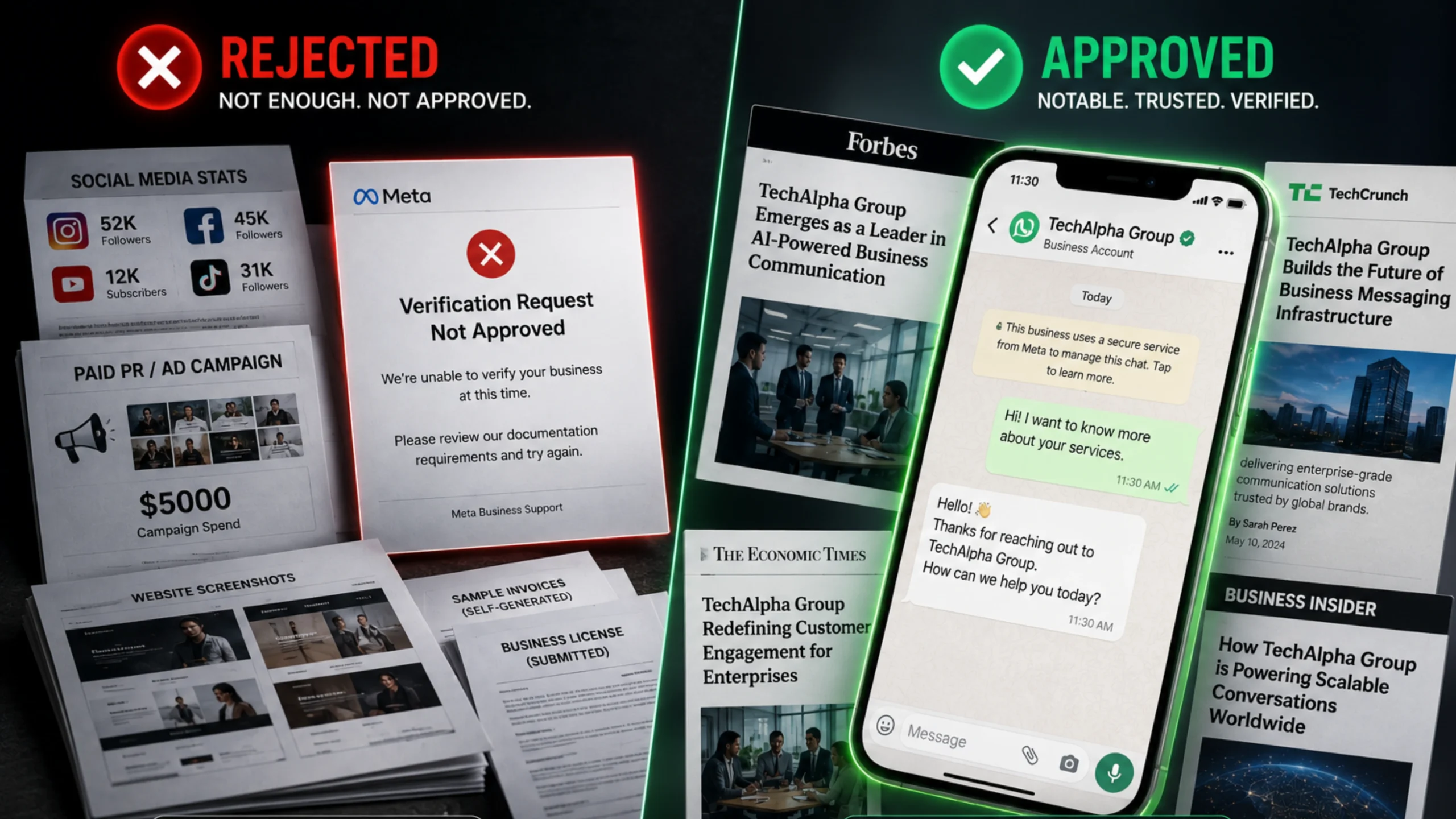
- WhatsApp: The message arrives from a Meta-verified WhatsApp Business account, complete with your official logo, display name, and a trusted green tick badge.
- Winner: WhatsApp. Visual verification kills phishing attempts instantly.
3. Delivery Speed & Reliability
- SMS: Variable. Depends on cell tower congestion.
- WhatsApp: WhatsApp delivers messages within milliseconds, ensuring authentication without delays.
- Winner: WhatsApp.
Reach
- SMS: Universal. Works on every phone, smart or dumb, anywhere in the world.
- WhatsApp: Requires a smartphone and an active internet connection.
- Winner: SMS.
The User Experience: Removing the Friction
Security matters, but conversion pays the bills. From a UX perspective, WhatsApp 2FA offers a vastly smoother flow.
The SMS Experience: User waits → Notification buzzes → User swipes down → Memorizes code → Swipes up → Types code. (Friction Point: If the code is “8421”, did they type “8412”?)
The WhatsApp Experience: User requests code → Notification appears → User taps “Copy” or uses Android’s “Autofill from App” feature → User is logged in.
Additionally, WhatsApp’s highly interactive platform allows for “One-Tap Verification” buttons. Instead of typing a code, you can send a message with a button that says “Approve Login.” Zero typing required.
Implementation Pitfalls and Intelligent Fallback Strategies
You might be thinking, “Okay, WhatsApp is better. Let’s switch.” But you cannot simply turn off SMS.
What if your user is in a region where WhatsApp is blocked, or they don’t have internet access? If you only offer WhatsApp, you lock them out.
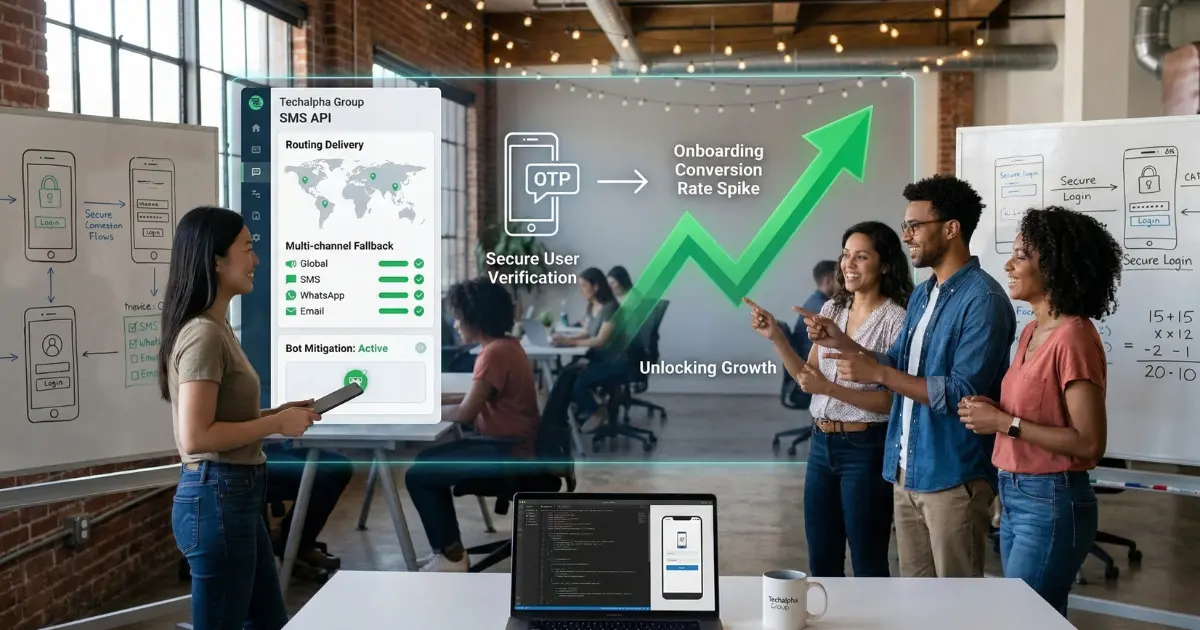
The solution is an intelligent routing system orchestrated by your API provider. You need a platform that attempts to send the OTP via WhatsApp first, and if undelivered, automatically retries and falls back to SMS. This hybrid approach gives you the security of WhatsApp for the majority of your users, and the universal reach of A2P SMS for the rest.
Upgrade Your Security with Techalpha Group
Implementing Two-Factor Authentication Security on WhatsApp requires navigating Meta’s approval processes and building complex fallback logic.
Techalpha Group specializes in this transition. We handle the Green Tick Verification process for your brand, help design approved message templates, and provide an API that manages Smart Fallback automatically.
The debate of WhatsApp 2FA vs SMS OTP isn’t about picking a winner; it’s about modernization. SMS should no longer be your primary method of defense. Upgrade your “front door” to a vault today.